
The presence of fake reviews acts as a major obstacle which prevents online shoppers from distinguishing between low-quality products and essential top-rated items. The “verified” ratings have an appearance of authenticity which requires specific detection methods and digital tools to perform wallet protection. The best method to determine product authenticity is to inspect every review section of the product.
The “Verbatim” Phrase Repeat
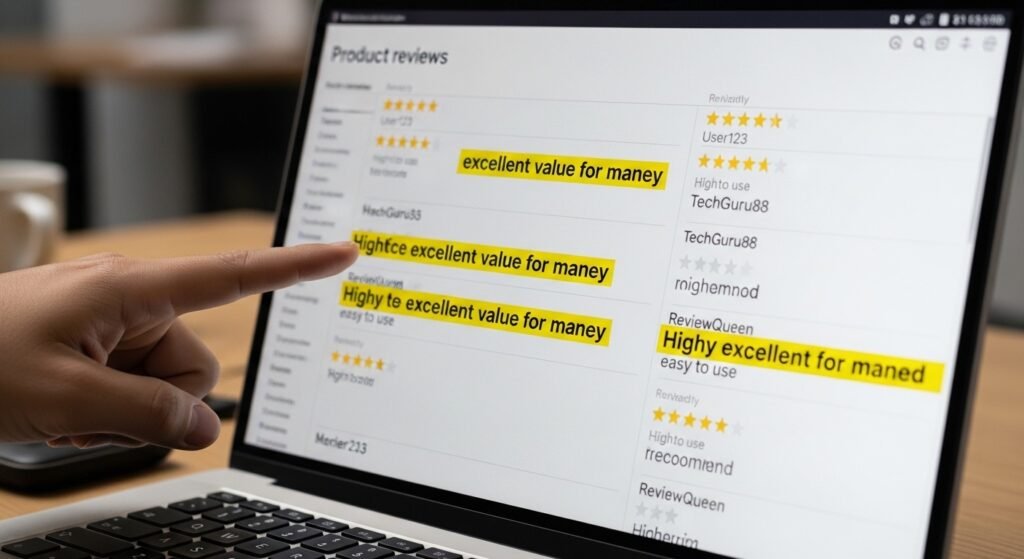
The identical usage of unusual word combinations and technical vocabulary by various reviewers indicates that they operated according to a shared script. The workers at professional review farms receive “keywords” which causes them to repeat those terms across multiple accounts in an unnatural manner.
Sudden Spikes in Five-Star Ratings

The review timeline requires examination. The product received 50 five-star reviews within one week after remaining inactive for several months which creates an extreme warning sign. Authentic growth develops through a series of gradual stages instead of showing sudden suspicious activity.
Overly Enthusiastic Language

The authentic review process requires reviewers to explain both product strengths and weaknesses. The review probably received payment from the seller because it reads like a marketing brochure which includes numerous exclamation marks and describes the product as “life-changing” while omitting any criticism.
The “Verified Purchase” Loophole
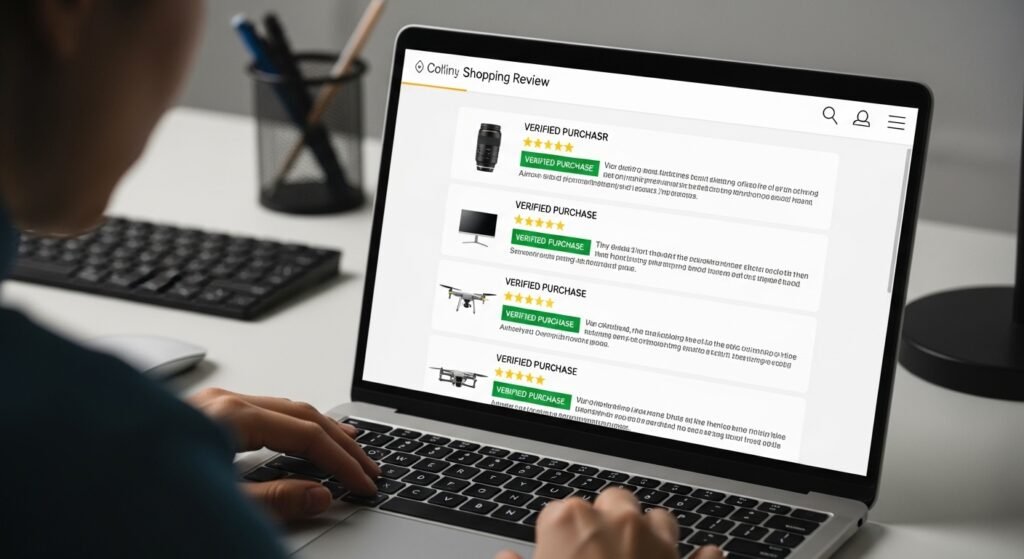
The “Verified Purchase” tag functioned as a respected standard but its value has diminished because people can now create false tags. Reviewers can receive payment from sellers through third-party applications after making a purchase which permits them to retain the item for positive reviews.
Nonsensical or Irrelevant Photos

Examine all user-submitted images very carefully. Some fake reviewers use stock images of high quality or completely different product images to deceive the review system. The photo requires evaluation because it appears too professional for authentic home environments.
Reviewer History Patterns

Click on a reviewer’s profile to see their history. The account displays traits of a professional reviewer because it has reviewed 20 products within one single day and it only gives five-star ratings to products from a specific brand.
One-Word “Empty” Reviews

The common tactic involves spreading multiple brief reviews which only state “Great!” or “Love it!” without mentioning any product performance details. The reviews allow people to boost their overall star rating because they do not need to evaluate the product.
Using Comparison Tools

Modern shopping requires buyers to use Fakespot and ReviewMeta for product research. The tools analyze product data after you paste the product link and they determine a “truthfulness” score based on the level of suspicion present in the product reviews.
Checking the “Recent” Tab First

The most recent reviews require sorting through the “Most Recent” option instead of using “Top Reviews.” Sellers establish fake product ratings during the launch phase, but genuine customers will begin to purchase the item which results in authentic customer reviews appearing at the top of the chronological listing.
Looking for Balanced Three-Star Reviews

Three-star and four-star ratings hold the most truthful reviews according to customers. The customers who created this review category represent actual individuals who enjoyed the product while providing truthful feedback about a minor product problem and a delivery problem.